Building the accessible clothing project website: From student collaboration to community input

This past term (Fall 2025), I mentored a team of students from Oregon State University's Design for Social Impact program on a project that brought research to life: building the foundation for the Accessible Clothing Project website. Now, with their work complete and our proposal to host a discussion group at the Move United conference approved, we're ready for the next critical step - getting input from the disability community before our Summer 2026 launch.
Design for social impact
DSI is an interdisciplinary course where students from different majors (design, computer science, business, engineering, etc.) work together on projects with real societal impact. Each team partners with a mentor who provides problem context and feedback while students develop solutions.
I mentored a team focused on building a comprehensive research hub - a website that’ll serve as a connection point for disabled people seeking clothing options, researchers studying barriers, designers exploring solutions, advocates pushing for change, and policy makers seeking evidence. The site needs to share ongoing research findings, facilitate stakeholder dialogue, and create space for community input throughout the research process.
Why a research hub?
The Accessible Clothing Project is transdisciplinary research. We’re studying barriers to clothing access from multiple angles, developing feasible solutions and working toward implementation at scale. A research hub serves everyone involved: disabled people get immediate solutions and advocacy evidence, researchers access findings and methods, designers understand real requirements, advocates find evidence for policy change, and everyone can engage with the research in progress.
What the students built
The students built infrastructure that could grow with the research, not just document what we already know.
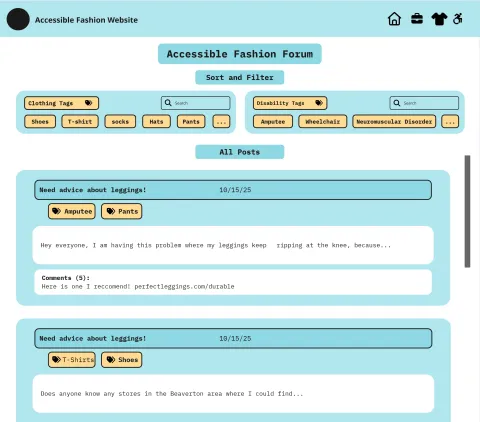
- Content Architecture: They organized the site into research findings, the accessible product directory, accessibility requirements documentation, resources by stakeholder group (researchers, practitioners, disability community, policy makers), and space for ongoing discussion and updates. The structure needed to be flexible enough to grow with the research while remaining intuitive.
- Branding and Visual Identity: They developed logo concepts and guidelines that communicate professionalism and approachability, carefully considering how to represent accessibility and body diversity without stereotypes.
- Accessibility Guidelines: They created comprehensive standards for the website itself. It's not enough to build a site about accessibility, the site must be accessible. They established guidelines for color contrast, keyboard navigation, screen reader compatibility, and plain language, testing every design decision against WCAG AA standards.
- Wireframes and Development: They translated planning into wireframes and built a functional prototype, ready for the next critical step: community feedback.
They brought different areas of expertise to the project, questioning assumptions and helping fill gaps in knowledge. More importantly, they recognized that this was not just a class assignment. They were helping build infrastructure designed to serve real people who encounter clothing barriers every day. That understanding gave the work a deeper sense of purpose and it was reflected in the care and commitment they brought to the project.
Community input at Move United
We are committed to working with people with disabilities - not as subjects, but as collaborators who shape the work. Before we launch publicly, we need input from the disability community. Our proposal to host a discussion group at the Move United Education Conference (April 20-23, 2026), the nation’s premier adaptive sports education event, was recently approved. It's the right space for meaningful conversations with disabled athletes, coaches, support organizations, and advocates.
We'll share the prototype and ask for honest feedback. Is the organization intuitive? Are we missing critical features? Does the language resonate or feel off? How can we make research findings accessible without oversimplifying? What role do participants want in this research - staying informed, contributing experiences, connecting with designers?
This input will shape the final version before the Summer 2026 launch.
Why accountability matters
Research on accessibility must be accountable to disabled people. That means involving them from the beginning, compensating them for expertise, actually listening and making changes, and being transparent about limitations. The students experienced this accountability firsthand. They learned that accessible design isn't just following guidelines, it's understanding lived experiences and revising assumptions.
What's next?
Between now and April, we're refining the prototype, preparing discussion materials, recruiting additional community reviewers, finalizing the research findings structure, and developing the general framework. After the conference, we'll incorporate feedback, conduct final accessibility testing, and launch in Summer 2026 with initial findings, the directory structure, and clear pathways for ongoing community input. We'll share updates on what we learn from community input, what changes we make, and any challenges we encounter later.
Stay informed
Do you want updates or wish to share your thoughts about what we're doing? Email us or join the conversation when we launch the website.
Related Blogs