More than just a tax return: How OSU’s VITA program builds community
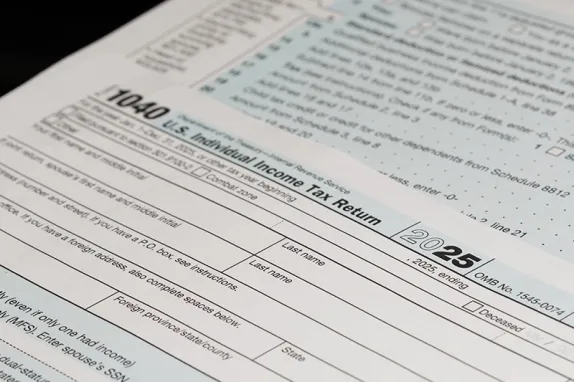
Every winter, as tax season approaches, a small but mighty team of Oregon State University students steps into a role that blends service, learning and human connection. Through the IRS Volunteer Income Tax Assistance (VITA) program, these volunteers provide tax preparation to community members with low to moderate income — offering reassurance, clarity and often a sense of relief, in addition to a completed tax return — all for free.
For clients, VITA is a valuable service. For the students who volunteer, it becomes more than a resume builder. It’s a place where confidence grows, skills sharpen and community becomes personal.
This year, four OSU students — Belia Grass, Jack Glover, Billy Matchett, and Kamea Wang — reflect on their experiences and reveal a program that is truly shaping community.


Common across every student’s experience is the emotional impact of helping someone navigate a process that can feel overwhelming, confusing or intimidating.
“We are essentially able to put money back into their pocket,” said Belia Grass, a junior in accounting with a Spanish minor. She describes the joy of seeing clients understand their returns — especially when the outcome brings relief. Even when the news isn’t good, she finds meaning in helping clients understand why they owe and how to improve their situation next year.
Billy Matchett, a third-year accounting student, remembers the moment he understood just how significant VITA’s impact is. “I didn’t realize the sheer level of help we were providing to the community until the first few pre-session meetings,” he says. Seeing clients’ reactions — especially the excitement when they learn their refund amount — has been a highlight of his first year in the program.
For Jack Glover, a senior studying accounting with a forestry minor, the reward comes from education. “I feel like I am able to educate those on their taxes and walk them through the different aspects of their return they might not know or understand.” Building clarity as builds the trust that keeps clients coming back year after year.
For Kamea Wang, a junior studying supply chain and logistics management, the community impact is personal. As an international student, she has become an informal bridge for other international students navigating unfamiliar tax rules. “Even though English is not my first language, I can still make a meaningful and positive contribution to the community,” she said.
Helping an older client complete a return that used to take her days was a moment that stayed with Wang. “Being able to help her finish her return efficiently in a short amount of time, and seeing her sincere gratitude, gave me a strong sense of accomplishment and helped me better appreciate the value of this volunteer work,” she said.
Across all their stories, one thing is clear: VITA isn’t just about numbers. It’s about dignity, access and the reassurance that someone is in your corner. And while the community benefits are far-reaching, the professional growth students gain is equally transformative.
Grass describes taxes as “a big puzzle” — one that becomes clearer through hands-on practice. Every day brings a new scenario, a new question or a new challenge. She’s also stepped into leadership as a training leader for the 2026 volunteer cohort, an experience she calls “amazing.”
Glover echoes this, noting that VITA has pushed him into leadership roles that have expanded his skills in ways traditional coursework can’t.
Matchett, who plans to become a CPA, sees VITA as a launchpad. The program has strengthened his understanding of the tax code, sharpened his communication skills, and given him real-world client experience. “Each client meeting has built upon these skills,” he says, and he’s eager to keep growing.
For Wang, who was filing her own taxes for the first time, the learning environment itself stands out. VITA’s structure — where every return is reviewed by another volunteer or supervisor — creates a safe space to learn through doing. “This process allows room for mistakes, enabling us to grow through real practice,” she said. The teamwork, collaboration, and shared problem-solving have strengthened her communication and interpersonal skills as much as her technical knowledge.
Perhaps the most unexpected part of VITA is the sense of belonging it fosters.
“I feel so lucky to be a part of this program, and its growth in the last few years,” Grass said. “I already get sad thinking about graduating and not working at VITA anymore, but our new volunteers are already crushing it in their first few weeks. I am so excited to see how this program will grow in the next few years.”
Wang shares that volunteering helped her feel more connected to OSU and more confident navigating life in the United States. “During my time at VITA, I have met many kind, supportive, and generous individuals,” she said. “Whether they were fellow volunteers or clients seeking assistance, their warmth created a strong sense of community. Through these interactions, I gradually became more comfortable and integrated into my academic and daily life in the United States, and I also grew more confident in myself. This experience helped me realize that volunteer service is not only about providing help to others, but also about building connections and fostering personal growth.”
Matchett highlights the camaraderie among volunteers and the joy of working with a supportive team. Jack loves seeing returning clients who trust the program year after year: “I enjoy seeing clients return and know that our service is a reliable and well-liked source for tax preparation.”
Related Blogs