Five Years In: Dean Carroll’s leadership
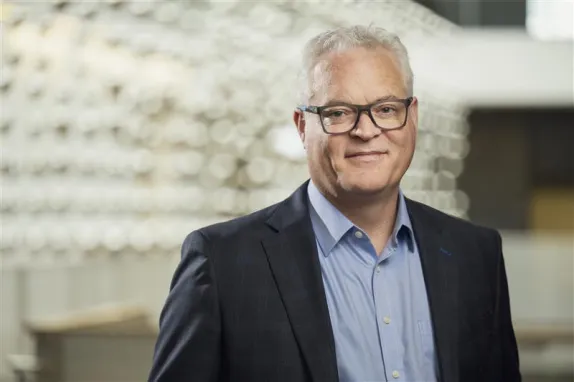
As the College of Business reaches five years under Sara Hart Kimball Dean Tim Carroll’s leadership, he reflects on how business education is changing, how AI is shaping the future of work, and how the college is ensuring that a student’s first job truly starts here.
College of Business: What is most important at this moment within the College of Business?
Tim Carroll: We’re in a moment where the future of work is changing rapidly. AI, automation and economic shifts are reshaping what employers need and what students should expect from college. Our priority is clear: helping students turn college into their first job by providing real experience, relevant skills and a strong foundation in business thinking. When business education works well, it prepares graduates to strengthen organizations and communities alike.
COB: “Business education for a changing world” — what does that mean to you?
TC: Business connects to everything — healthcare, technology, sustainability, public service and beyond. When students learn to think strategically, ethically and creatively, they gain tools that make every field stronger. For us, that means combining classroom learning with applied experience so students graduate ready not just for a job, but to make work better wherever they land.
COB: How do you see AI shaping the future of business education?
TC: AI is becoming part of how work gets done across every industry. Our responsibility is to help students use these tools thoughtfully and confidently. We’re integrating AI into the curriculum to strengthen judgment, decision-making, and adaptability. We’re not replacing people, but preparing our graduates to lead responsibly in tech-enabled workplaces. Understanding AI is now part of being business-ready.
COB: “Your first job starts here” — what does that look like?
TC: College shouldn’t be a warm-up. Students should be building skills, experience and professional networks from day one. Through applied projects, industry engagement and programs like CareerBridge and Blueprint, students gain exposure to real work, financial and AI literacy and mentorship. Our goal is to make that experience the norm so every student leaves prepared for their first job and positioned for long-term success.
COB: How does the College of Business contribute to Oregon’s economy and communities?
TC: As a land grant institution, Oregon State has a responsibility to serve the state. Our faculty and students are working on challenges like sustainability, rural economic vitality, AI ethics and workforce transformation. When business works well, it improves lives and strengthens communities — and that’s where we focus our impact across Oregon and beyond.
COB: What excites you most about what’s ahead?
TC: The opportunity to connect student success, applied learning, research and innovation into a cohesive model for the future of business education. With strong partners, emerging technologies and a clear focus on career readiness, we can ensure our graduates are prepared to lead and to make business a force for good in whatever comes next.
Related Blogs