Business Analytics and Applied AI
Learn to identify opportunities for artificial intelligence, develop intelligent solutions and drive AI-enabled innovation within organizations. The Oregon State master of science in business analytics and applied AI equips professionals with the skills to apply AI agents, generative AI, machine learning and advanced analytics to address complex real-world challenges and create measurable business and societal impact through hands-on projects with industry partners.
The MSBAAI also is part of our system of "stackable credentials.” For example, if you've earned an OSU graduate certificate in business fundamentals, business analytics, supply chain and logistics management or environmental management, those credits would fully transfer into the MSBAAI, and count toward your master’s degree.
The MSBAAI can be completed fully online or in-person in Corvallis.

Overview
In a field where artificial intelligence technologies are advancing at an unprecedented pace, this 45-credit STEM-designated master's program prepares professionals to lead and drive organizational innovation through the strategic application of AI and data analytics. Students develop an understanding of data-driven decision-making, machine learning, AI agents and large language models (LLMs) while building the adaptability, curiosity and lifelong learning skills needed to evaluate emerging technologies and apply them effectively to complex business challenges
With elective pathways in finance, supply chain, marketing, information systems and environmental management, our students tailor their skills to industry‑specific roles to emerge equipped to guide organizations through digital transformation and shape competitive, innovation‑driven decision‑making.
What you’ll learn
Conduct research or produce some other form of creative work and demonstrate mastery of subject material.
Conduct scholarly or professional activities in an ethical manner.
Develop advanced predictive models using machine learning algorithms to forecast business trends and outcomes, demonstrating proficiency in applying regression, classification, and clustering techniques.
Evaluate data-driven solutions by assessing the reliability, validity, and ethical implications of applying artificial intelligence techniques in business contexts.
Analyze complex business datasets using advanced exploratory methods and data visualization techniques, extracting actionable insights to support strategic decision-making in various industries.
Design and implement optimized algorithms for specific business problems, leveraging techniques such as deep learning, natural language processing, and large language modeling to improve operational efficiency and performance.
Program statistics
Job placement rate for graduates of OSU graduate business programs
ranked Oregon business master's programs
Expected growth in "Computer and Information Systems Managers"
Learning outcomes
Conduct research or produce some other form of creative work.
Demonstrate mastery of subject material.
Conduct scholarly or professional activities in an ethical manner.
Analyze the impact of an enterprise on its various stakeholders.
Propose and collect data necessary to inform a discipline-based evaluation of a complex business challenge.
Apply critical thinking skills to a business challenge in the presence of uncertainty and ambiguity.
Ways to attend
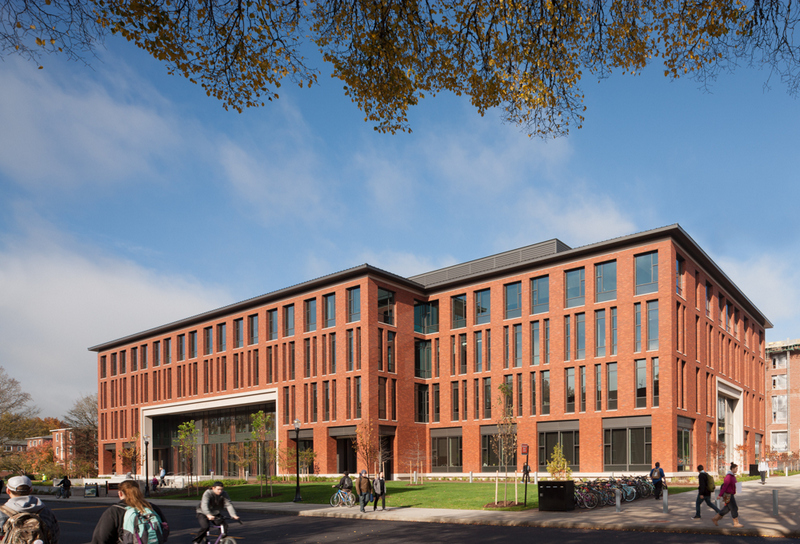
Attend classes in Austin Hall, the $50 million, 100,000-square-foot building with five research centers, a marketing research suite, 10 classrooms, 23 computer- and teleconference-equipped project rooms, a 250-seat auditorium, a café and faculty offices.

Study from anywhere and earn one of our 100% online, fully AACSB-accredited business degrees. Nationally top-ranked for online learning, our classes are taught by business faculty who are known for research excellence and industry experience.
Request more information
Get started today.
Student Stories